Organizations with mature portfolio management practices complete 89% of projects successfully compared to just 36% for those without structured processes, according to PMI research[1]. Yet most mid-market construction and engineering firms struggle with project selection, resource allocation, and strategic alignment.
Our article presents a proven seven-step framework for building portfolio management capabilities that drive measurable business outcomes.
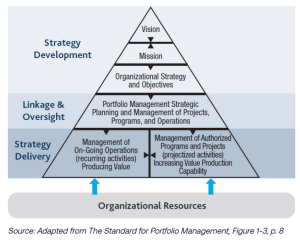 Credits: https://www.pmi.org/learning/library/organizational-project-management-10667
Why portfolio management drives competitive advantage
Strategic alignment creates business value
Project portfolio management (PPM) establishes clear connections between daily project work and long-term strategic objectives. Without this alignment, organizations waste resources on initiatives that fail to advance business priorities. Research shows that 85% of projects stay[2] on track when organizations implement proper portfolio management practices.
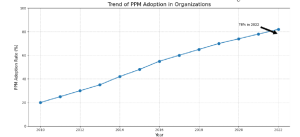
Credits: https://www.researchgate.net/publication/383846818_Project_Portfolio_Management_Best_Practices_for_Strategic_Alignment
Construction and engineering firms face unique portfolio challenges. You’re managing multiple concurrent projects while balancing client commitments, resource constraints, and market volatility. Structured PPM processes help you make objective decisions about which opportunities to pursue and which to decline.
Resource optimization reduces waste
Most mid-market firms operate with limited skilled personnel, specialized equipment, and available capital. Portfolio management provides visibility into resource demand across all active and proposed projects, revealing conflicts before they become critical problems.
AI-powered PPM tools now process real-time and historical data in seconds[3], helping portfolio managers spot trends, predict risks, and identify optimization opportunities. Recommender systems can match the right experts to projects automatically and identify overloaded resources that require reallocation.
Risk management through portfolio perspective
Individual project risk management focuses on threats to single initiatives. Portfolio risk management examines how risks interact across your entire project landscape, surfacing systemic vulnerabilities that wouldn’t be visible from individual project perspectives.
Key components of a PPM strategy
Step 1: Assess your current state
Document how your organization actually selects, prioritizes, and monitors projects—not the official process in outdated procedures. Conduct stakeholder interviews to identify specific gaps in governance, resource allocation, and strategic alignment.
Establish baseline metrics: project success rates, average time from proposal to funding decision, and resource utilization rates. These baselines quantify the business case for PPM transformation and provide targets for measuring improvement. This assessment mirrors the strategic approach you’d take when building business process maps to understand current workflows.
Step 2: Define scope and objectives
Establish clear boundaries for portfolio governance. Determine which project categories fall under PPM oversight and set measurable objectives aligned with business strategy:
- Improve project selection accuracy through strategic alignment scoring
- Reduce time-to-value for approved initiatives
- Optimize resource utilization while preventing overallocation
- Create executive portfolio visibility through integrated dashboards
Break implementation into phases with clear milestones and decision points. Secure executive sponsorship by connecting portfolio improvements directly to strategic business priorities. This phased approach aligns with proven digital transformation roadmaps that balance ambition with pragmatic execution.
Step 3: Design portfolio methodology
Create structured criteria for evaluating project worthiness. Organizations implementing systematic prioritization frameworks[4] reduce bias and enable data-driven decisions across portfolio reviews.
Develop a scoring model that weighs projects against:
- Strategic alignment with business priorities
- Financial return (ROI, payback period, NPV)
- Resource requirements across functional areas
- Risk level (implementation, market, dependency)
- Market opportunity and competitive advantage
Establish governance structures with defined decision rights. Clarify who approves new projects, reallocates resources, and terminates underperforming initiatives. Balance your portfolio across risk profiles, investment horizons, and strategic priorities. Effective work breakdown structures at the project level support portfolio-level analysis.
Step 4: Select technology infrastructure
Technology enables portfolio management at scale. For Microsoft-centric organizations, Microsoft Project Server provides comprehensive capabilities for complex portfolio management. However, with Project Online retiring September 30, 2026, evaluate Power Platform-based alternatives that integrate with Microsoft 365, Teams, Azure DevOps, and Power BI.
Essential platform capabilities include:
- Automated project intake and approval workflows
- Resource capacity planning and conflict identification
- Real-time portfolio dashboards with drill-down capabilities
- Integration with ERP systems for financial data
Consider how project portfolio management software integrates with your existing technology stack and supports your specific governance workflows.
Step 5: Implement project selection process
Create centralized intake mechanisms that capture consistent information for objective evaluation. Route proposals through your approval workflow with preliminary screening, detailed evaluation against scoring criteria, and portfolio review sessions for funding decisions.
Select projects that maximize strategic value within resource and budget constraints. Apply capacity constraints, balance portfolio across defined dimensions, and consider project dependencies. Document all decisions with clear rationale for approved, declined, and deferred initiatives. Understanding how to prioritize tasks at the individual level scales to portfolio-level prioritization frameworks.
Each approved project then moves through defined project life cycle phases — from initiation and planning through execution to closure.
Step 6: Execute active monitoring
Establish baseline metrics for every approved project and define portfolio-level KPIs:
- Strategic alignment percentage (projects supporting priority strategies)
- Resource utilization efficiency
- Portfolio velocity (project completion rates)
- Return on portfolio investment
Conduct quarterly strategic reviews to assess portfolio health, evaluate continuation decisions, and consider new proposals. Implement monthly operational reviews to monitor risks, address resource conflicts, and track milestone progress. This cadence mirrors project scheduling techniques that balance oversight with execution autonomy.
Make data-driven portfolio decisions: redirect resources from underperforming projects, terminate strategically irrelevant initiatives, and accelerate promising opportunities with additional resources. Portfolio management vs project management distinctions become critical when making these strategic tradeoffs.
Step 7: Establish continuous improvement
Capture lessons learned systematically through post-implementation reviews. Track patterns across your portfolio to identify systematic issues requiring methodology refinement. Update scoring criteria, governance processes, and resource planning approaches based on organizational learning.
Measure PPM impact against initial baselines. Compare current project success rates, proposal-to-funding cycle times, resource utilization efficiency, and strategic alignment improvements. Communicate results transparently to build organizational understanding of portfolio decision-making.
How to successfully implement PPM with expert support
Strategic capability development
Building organizational PPM capabilities requires more than implementing software—it demands systematic transformation of processes, skills, and data discipline across project teams. Our team brings proven methodologies from deploying portfolio management solutions for construction and engineering firms.
We help organizations:
- Assess current capabilities and identify optimization opportunities
- Design portfolio methodologies aligned with business strategy
- Implement Power Platform-based solutions integrating with Microsoft 365
- Establish governance frameworks with clear decision rights
- Train executives and portfolio managers on data-driven decision-making
- Create portfolio reporting and dashboards for real-time visibility
Integration with existing systems
Successful PPM platforms integrate seamlessly with existing project management and financial systems. We specialize in connecting Microsoft Teams project management apps with portfolio dashboards, creating unified environments where data flows automatically between project execution and portfolio oversight.
This integration eliminates data silos that undermine portfolio decision-making. When project performance data, financial information, and resource allocation live in disconnected systems, executives can’t make informed tradeoff decisions between competing initiatives.
Proven results from real-world implementations
A large landscaping company deployed 60+ Power Platform applications to automate workflow management, reducing project administration time from 30 hours to 4 hours per billing cycle while achieving complete work order visibility. This transformation freed operations managers for strategic portfolio decisions rather than administrative tasks.
A real estate consulting firm migrating to Dynamics 365 Business Central achieved 80% improvement in billing accuracy and 60% reduction in approval dependencies. Enhanced financial visibility enabled better portfolio decisions based on accurate profitability data rather than estimates.
For infrastructure companies, centralized document management systems reduce manual handling by 90% and document retrieval time by 85%. This efficiency allows instant access to critical information, translating directly into faster execution and better resource utilization across portfolios.
Conclusion
Building effective PPM processes requires commitment, structured methodology, and appropriate technology infrastructure. Organizations investing in structured portfolio management gain competitive advantage through better resource allocation, clearer strategic alignment, and faster adaptation to changing conditions.
The foundation of successful portfolio management lies in systematic planning, appropriate technology infrastructure, and team capability development. Forward-thinking construction executives invest in PPM as core competitive strategy rather than treating it as administrative overhead.
Technology platforms enable this transformation by automating data exchange, providing analytical tools that surface insights, and creating collaborative environments that align stakeholders. Organizations following structured implementation frameworks position themselves for sustained competitive advantage through data-driven portfolio delivery.
Ready to transform your portfolio management? Our team brings construction-specific expertise in PPM methodologies, Microsoft platforms, and organizational change management. Schedule a consultation to discuss your portfolio management needs →