The enterprise website in the AI era: From content platform to intelligent experience.
For most of the last two decades, an enterprise website was judged by what it held: how complete the product catalog was, how current the newsroom, how well organized the resource library. That standard is quietly expiring. A website is now judged by what it resolves. The change is not the arrival of AI on the page. It is the arrival of AI before the page. A customer with a question no longer starts at a homepage and works inward. They ask an assistant, read a summary, follow a link from a comparison site or a campaign, and land three levels deep with a specific intent already formed. The site does not get to introduce itself. It gets one chance to be useful. That shifts the design question. For years the question was how to help people browse what we publish. The better question is how to help people finish what they came to do. Inventory to intent. What intent actually looks like Two visitors type adjacent phrases. One searches for the best health insurance for parents. The other searches for health insurance claim status. Both arrive at the same insurer, possibly on the same page, and they have almost nothing in common. The first is comparing, and needs orientation, plain language, and a way to narrow the options. The second is already a customer, and needs one status and one number. A site organized around the company’s structure serves both of them badly, because the company’s structure is not what either of them asked about. Intent, in practice, resolves into a small set of jobs: check a status, test eligibility, find the nearest service location, download a document, estimate a cost, reach a person. Most enterprise sites can technically support every one of these, and still turn each into a small research project. The customer has to learn how the organization is divided before finding the division that helps them. That translation work should belong to the site, not to the customer. Publishing was the wrong strength to keep optimizing Enterprises are good at publishing. Content management systems, governance workflows, translation pipelines, and brand review represent a serious investment in the ability to put an accurate page online at scale. None of that is wasted. But volume and findability are different problems, and more content only ever solves the first. Consider someone looking at a financial product. A publishing site gives them a product page, an FAQ, an eligibility list, and a form to download. Everything they need is present, and the reasoning is still theirs to do: which variant applies to me, do I qualify, which documents will I need, what happens after I submit. An assisting site does that reasoning with them. It narrows the options against what the customer has said about themselves, answers the eligibility question directly, names the documents, and carries them into the application while the intent is still live. The difference is not better content. It is assistance. What makes a website intelligent A chatbot in the corner does not make a site intelligent, and neither does swapping keyword search for a vector index. Four capabilities have to hold together. The first is reconciling the customer’s language with the company’s. Customers ask about a car loan, or about car finance eligibility. Internally the offering is called vehicle finance, and the taxonomy, the tagging, and the search index all speak that internal dialect. Semantic search and intent classification are useful here precisely because they absorb the mismatch instead of asking the customer to. The second is making information findable without a map. Natural language queries, contextual retrieval, and related content that follows the question rather than the site hierarchy. Nobody should need to understand an information architecture in order to get past it. The third is completing something. Information is only the first half of a journey. Eligibility checks, estimates, comparisons, callback requests, applications, case status — the next step has to be present rather than implied. A site that informs perfectly and completes nothing has quietly handed the customer back to the call center. The fourth is learning from behavior. Entry points, queries that return nothing useful, pages where people stall, the exact step where applications are abandoned. This is where AI earns its keep without any of the drama: marketing and digital teams get a reading of where intent is being lost, and content, navigation, and journeys can be corrected against evidence rather than opinion. Self-service built this way is not about removing people. It is about placing them where they change the outcome — the complicated case, the exception, the moment of doubt — instead of the twenty routine questions that never needed them. A website is only as intelligent as what it can reach Ask an enterprise site for the status of a service request. A content-led site explains how service requests work. A connected site answers the question, given identity, access rights, and an integration that returns the record. That gap is the entire argument. The customer’s journey runs through systems the website does not own: CRM, transactional and commerce platforms, case management, product and pricing data, support knowledge, analytics. AI is useful in proportion to the trusted data it can reach. Cut off from those systems it can rephrase content and surface it faster, which is worth something, but it cannot move the journey forward. The instinct at this point is to rebuild — one new platform to consolidate everything. That is slow, expensive, and usually unnecessary. Peripheral automation, the approach we take at Advaiya, is to build around what is already in place: reuse core data where it lives instead of duplicating it, extend or wrap existing processes instead of displacing them and their owners, and add the new experience at the edge, where the customer meets it. The website becomes the layer that composes what the enterprise already knows, not another place where the enterprise stores it. Governance belongs in this design conversation, not
A pragmatic roadmap to automate finance, HR, and procurement
Automation in finance, HR, and procurement is no longer about reducing keystrokes alone. The real opportunity is to improve cycle times, decision quality, employee experience, and control while keeping core systems stable. McKinsey notes that automation and AI are being used to improve performance and reduce costs across finance, human resources, and IT, while Deloitte highlights the growing move in HR toward using AI to augment people rather than simply replace tasks. Start with context: Map friction before you automate The most effective roadmap starts with context. Map the highest-friction processes first: invoice handling, employee onboarding, requisition approvals, vendor creation, policy queries, month-end reporting, and exception management. Then identify where delay, duplication, rework, or poor data quality is hurting the business. In procurement, McKinsey recommends engaging stakeholders early, defining the business case clearly, and using quick wins to build momentum. Build competence around the right use cases The second step is to build competence around the right use cases. In finance, that usually means automating transaction-heavy work. In HR, the strongest early wins are in employee self-service and onboarding. In procurement, AI and analytics accelerate spend categorization, demand forecasting, sourcing decisions, and supplier insight. Finance Reconciliations and reporting packs Approvals workflows Working-capital visibility HR Employee self-service and policy support Candidate communications Onboarding workflows Procurement Spend categorization and demand forecasting Sourcing decisions and supplier insight Apply Peripheral Automation first A practical approach is to apply Peripheral Automation framework first. At Advaiya we describes this as introducing new processes and technologies at the edge of the enterprise without disrupting core systems, allowing teams to test, learn, and optimize quickly. That makes it well suited to high-value but low-risk workflows such as digital forms, workflow routing, dashboards, and controlled data integrations. Treat change management as part of the solution The most successful programs combine process redesign, role clarity, governance, and adoption support so that automation creates relief rather than resistance. Deloitte’s HR research points to a broader shift toward AI-assisted work, which reinforces the need to redesign jobs and experiences thoughtfully. The roadmap in brief Start with pain points, prove value quickly, automate around the core, and scale with discipline. Done well, finance becomes faster and more predictive, HR becomes more responsive, and procurement becomes a stronger lever for business value. Start with pain points — map friction across finance, HR, and procurement Prove value quickly — target quick wins that build momentum and confidence Automate around the core — use Peripheral Automation to avoid disrupting stable systems Scale with discipline — combine governance, role clarity, and adoption support Can OnePlan handle multiple developments at different lifecycle stages? Yes. OnePlan tracks projects from acquisition through handover, with portfolio dashboards that show status across all phases simultaneously. How does PPM differ from construction project management software? Construction PM tools manage individual job sites. PPM connects all projects to portfolio-level financial performance, resource capacity, and strategic alignment. What’s the typical timeline for real estate PPM implementation? Phased implementations deliver initial portfolio visibility within 8 to 12 weeks. Full enterprise rollouts with financial integration typically take 4 to 6 months. Does OnePlan integrate with existing real estate accounting systems? OnePlan integrates natively with Dynamics 365 and connects to other financial systems through the Microsoft ecosystem, providing real-time budget data without manual reconciliation.
How to embed AI agents to document management system
The evolution of document management systems Document Management Systems (DMS) have long served as enterprise repositories for storing, organizing, and retrieving information. However, as organizations deal with increasing volumes of unstructured data, static document systems are no longer sufficient to support modern operational demands. Businesses today require document ecosystems that can understand context, assist users, and drive actions across workflows. This is where AI agents are beginning to play a transformative role. Introducing intelligence with AI Agents Unlike traditional automation models that operate predefined rules, AI agents introduce contextual intelligence into document workflows. They can interpret information, identify patterns, trigger actions, and assist users dynamically across business processes. The focus is no longer limited to document storage; it is shifting toward intelligent document orchestration. Embedding AI agents into a Document Management System does not necessarily require replacing existing enterprise platforms. Instead, organizations can integrate AI capabilities around existing workflows to create a more connected and responsive operational layer. For example, AI agents can automatically classify incoming documents, extract key business information, summarize lengthy records, identify missing compliance data, trigger approval workflows, and recommend next actions based on historical interactions. In customer service environments, they can instantly retrieve contextual documents for support teams. In finance and procurement functions, they can validate invoices and flag processing exceptions before manual intervention is required. What enables successful adoption This approach aligns closely with the growing enterprise focus on peripheral automation. Enabling intelligent execution around core business systems without disrupting foundational platforms. However, successful implementation requires more than introducing AI capabilities into a DMS environment. Organizations must first understand document dependencies, operational bottlenecks, governance requirements, and user behavior patterns. Embedding AI effectively requires a combination of business discovery, workflow alignment, structured change management, and practical technology integration. According to Gartner, enterprises are increasingly prioritizing intelligent automation strategies that combine AI, workflow orchestration, and contextual decision support to improve operational agility and business efficiency. The future: From documents to decisions Looking ahead, the future of document management lies in its ability to evolve into an intelligent system of action. Instead of just storing information, DMS will increasingly play a central role in enabling decisions, automating workflows, and improving responsiveness across the enterprise. Organizations that successfully embed AI agents into their document ecosystems will not only streamline operations but also build more scalable, insight-driven, and adaptive business environments. Can OnePlan handle multiple developments at different lifecycle stages? Yes. OnePlan tracks projects from acquisition through handover, with portfolio dashboards that show status across all phases simultaneously. How does PPM differ from construction project management software? Construction PM tools manage individual job sites. PPM connects all projects to portfolio-level financial performance, resource capacity, and strategic alignment. What’s the typical timeline for real estate PPM implementation? Phased implementations deliver initial portfolio visibility within 8 to 12 weeks. Full enterprise rollouts with financial integration typically take 4 to 6 months. Does OnePlan integrate with existing real estate accounting systems? OnePlan integrates natively with Dynamics 365 and connects to other financial systems through the Microsoft ecosystem, providing real-time budget data without manual reconciliation.
Building an AI strategy for energy companies: from pilot projects to enterprise-scale deployment

Most energy companies don’t have an AI problem. What most have is a deployment problem. The first pilot runs well, the second runs well, the third stalls somewhere between IT and operations, and a few quarters in, the question shifts from “what does this model do” to “who actually owns it now.” Building an AI strategy for an energy company means designing for that gap from day one. The pilot is rarely the hard part. Standing the pilot up against a real grid, a regulated asset base, and a workforce already running a day job is where strategy gets tested. Why AI in the energy industry rarely makes it out of pilot According to the IEA’s 2025 Energy and AI report, AI-based fault detection can reduce outage durations by 30% to 50%. The technology works. The barrier isn’t capability. The barrier is what happens after the proof of concept ends. Three patterns consistently stall energy AI projects between pilot and production: Pilots are funded as innovation experiments, not as the first phase of an operating capability. Once the innovation budget runs out, the project has no permanent home. Pilot data lives in a sandbox, not against the live SCADA, EMS, and asset-management systems that actually run the business. Integration is a separate program, and nobody scoped it. Operations leaders distrust models they didn’t help build. Adoption requires earning trust, not just shipping accuracy. The IEA’s outage-reduction figure is the upside of moving past those three barriers, not the starting point. What an enterprise-grade AI implementation strategy actually requires A serviceable AI strategy for an energy or utilities operation has four anchors. Skip any one, and the program tends to stall in the same place every time. A business outcome, not a use case Use cases are easy to generate; outcomes are not. The strategy starts by naming the operational or financial result you actually want, whether that’s fewer unplanned outages, a sharper renewable forecast, or a lower imbalance settlement, and works backward to the AI capabilities required. Without a named outcome, the AI portfolio becomes a graveyard of pilots that demoed well. A unified data foundation Models are functions of data. In energy, that data lives in SCADA historians, GIS systems, asset registers, market price feeds, and weather services. A unified data layer on Azure Data Lake, Microsoft Fabric, Databricks, or equivalent does the integration work once, so each new use case lands on the same foundation rather than its own pipeline. A governance frame that buyers and operators trust Models drift. Regulators ask questions. Operations teams need to know what a model does and doesn’t do. Governance documents the assumptions, performance thresholds, retraining intervals, and escalation paths before the model goes live, not after the first incident. A scaling pattern, not a one-off The fourth anchor is a reusable deployment pattern: how each use case moves from pilot to production. Same data layer, same MLOps pipeline, same review gates, same adoption playbook. Once the pattern exists, the second use case is faster than the first, and the tenth is much faster than the second. Where artificial intelligence in the energy sector creates the most measurable value The use cases worth prioritizing aren’t theoretical. For energy companies building a strategy from a clean sheet, four areas typically justify the first wave of investment: Predictive maintenance for transmission and generation assets. AI on vibration, temperature, and load data spots failures days or weeks ahead of conventional schedules. Renewable generation forecasting. Hour-ahead and day-ahead forecasts on wind and solar shape bidding, curtailment, and grid commitments. Grid fault detection and outage response. Pattern recognition on telemetry shrinks the gap between event and dispatch. Customer demand and price forecasting. The same models that price tomorrow’s spot also flag emerging consumption anomalies for revenue and credit teams. Each of those use cases has a measurable KPI, an existing data source, and an operations owner already accountable for the outcome. Each is also a credible starting point for an embedded AI program that scales across the broader portfolio. Companies delivering AI-enabled control systems for the smart grid need a different partner model Implementing AI for smart-grid control systems isn’t a software vendor decision. The choice is a partner decision. Generic AI vendors can ship models. Generic SCADA vendors can ship control logic. Closing the loop between predictive output and operational action requires a partner who understands both, plus the regulatory and cybersecurity envelope around them. That partner profile is rarer than the market suggests. Most “AI for utilities” pitches stop at insight. The harder work, putting the recommendation in front of an operator at the right moment, in a system the operator already trusts, with an audit trail the regulator can read, is the kind of AI strategy consulting and implementation that came from doing the work, not from selling around it. The governance problem that most energy AI strategies underestimate Regulated industries don’t deploy AI the way a consumer app does. Every model that touches a grid, a meter, or a market filing is, by default, in scope for compliance review. Governance is, therefore, foundational, and the right time to design it is before the first model ships. Three questions to settle before the first production deployment: Who signs off on a model change? An IT release manager isn’t sufficient when the model affects load dispatch. What’s the audit trail? Each prediction needs traceable inputs, version metadata, and a documented rationale for the operator action it triggered. What happens when the model is wrong? Every AI capability needs a defined human override and a documented fallback procedure. Energy AI without that frame doesn’t scale. With it, scale becomes a structured exercise rather than a leap of faith. Agentic AI approaches don’t reduce the governance burden; they raise the bar, because autonomous decisions need stronger audit trails, not weaker ones. From experiment to operating discipline The energy companies that turn AI into a competitive advantage aren’t the ones running the most pilots. The companies that
Logistics and fleet optimization for cement companies: reducing delivery costs with AI-powered routing
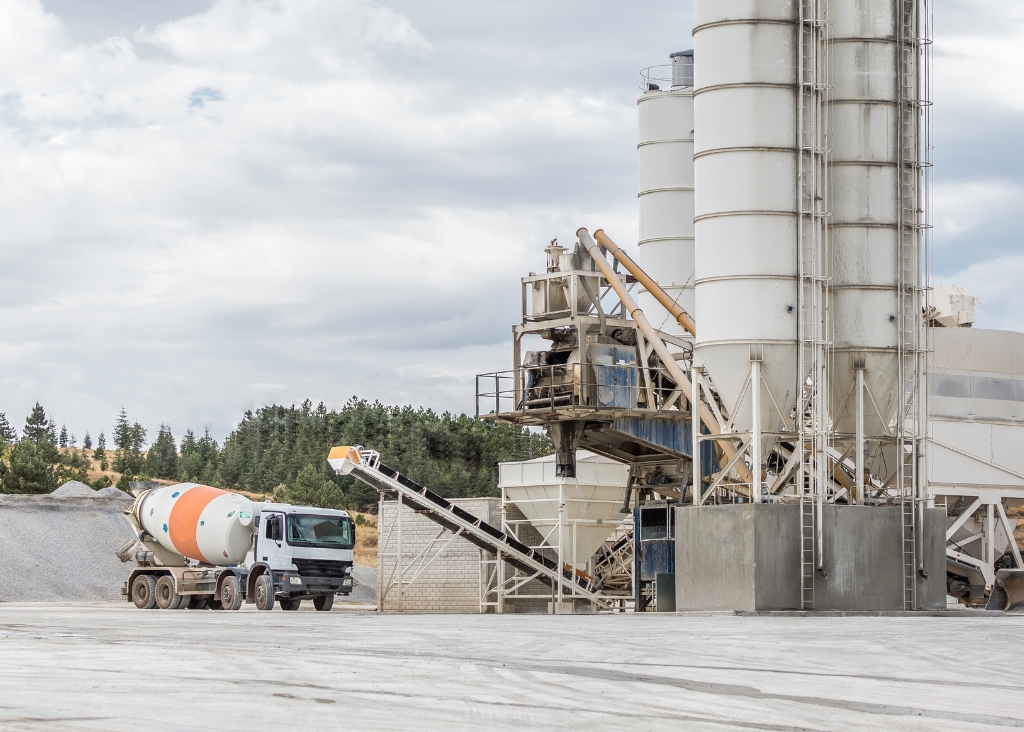
Why cement logistics quietly bleeds margin: the cost structure CTOs need to understand The cost story for cement distribution is not subtle. Industry research on cement logistics, including a Lafarge Surma Cement academic case study published in IRJET, shows that logistics accounts for close to 30 percent of the total cost of cement, with the average bag travelling roughly 300 kilometres before consumption. A more recent study published in the Journal of Informatics Education and Research (2025) places total logistics costs in cement projects in a band of 14.60% to 22.56% of total investment costs, which is the range most diversified producers will recognize from their own books. McKinsey’s research on AI in distribution operations finds that embedding AI across logistics can deliver 5 to 20 percent reductions in logistics costs and 20 to 30 percent reductions in inventory, with the upper end of those ranges typically going to operations carrying the most underlying complexity, which is exactly where cement sits relative to other freight categories. The honest reading of those numbers is that cement logistics has more headroom for AI optimization than most categories of freight, precisely because the underlying problem is harder. The producers still running planning sheets and dispatcher intuition against fleets of forty-plus mixed vehicles are leaving the largest improvements on the table. Where AI-powered cement logistics is heading in 2026 Three operational shifts are reshaping how cement companies are building their fleet technology stacks, and each one has direct implications for what a CTO should be sequencing into the next 18-month roadmap. The first shift is real-time adaptive routing, replacing static dispatch plans. AI routing engines now process live traffic data, weather conditions, road closures, and vehicle telemetry to continuously adjust delivery plans rather than committing to a morning-issued schedule that drifts away from reality by mid-shift. For cement trucks, which move more slowly and brake differently than standard vehicles, route selection now factors in road grade, surface quality, and load weight alongside straight-line distance. When one truck falls behind schedule, the system rebalances the remaining fleet automatically rather than letting the entire day’s dispatch cascade into delays. DHL’s published work on AI in last-mile delivery describes the same shift in their parcel network, where dynamic routing reduced both delivery time and fuel consumption against their previous static planning approach. The second shift is predictive fleet maintenance integrated with dispatch rather than running as a parallel workshop scheduling tool. McKinsey’s distribution research consistently identifies maintenance as one of the highest-value AI use cases, particularly when the maintenance signals feed back into routing decisions in close to real time. For cement fleets, this means telematics data from drum motors, pneumatic systems, and engine diagnostics flows into the routing engine continuously, so a truck showing early signs of hydraulic pressure anomalies gets routed to lighter loads and closer deliveries rather than failing on a long-haul run with a load of high-spec ready-mix on board. The third shift is plant-to-site cycle optimization for ready-mix operations. For ready-mix concrete, where timing literally determines whether the product arrives in usable condition, AI scheduling now syncs plant batch timing with truck dispatch and estimated pour times at the jobsite. Predictive models trained on historical delivery data and site access patterns generate actual unloading time estimates rather than relying on standard assumptions that rarely match what happens in practice. The connected pattern this fits into is covered in our walkthrough of the seven types of AI agents reshaping workflow automation, where multi-agent coordination is becoming a standard architecture for high-complexity operational environments. How Microsoft Azure AI and Power Platform fit into the cement logistics technology stack Most cement producers in this segment are already running on the Microsoft ecosystem at the financial layer, which makes Azure AI and Power Platform a natural backbone for the operational layer too. The combination gives operations leaders a way to build the dispatch intelligence they actually need rather than the one their TMS vendor’s roadmap happens to deliver in next year’s release notes. Azure AI as the optimization engine for fleet routing and predictive maintenance Azure Machine Learning trains routing models on historical delivery data, fleet performance patterns, traffic conditions, and site accessibility records pulled from years of dispatch history. The resulting models generate optimized dispatch plans that account for vehicle-specific constraints, including drum truck capacity, tanker weight limits, and flatbed site requirements, alongside customer delivery windows and driver hours-of-service regulations, all simultaneously rather than sequentially. Azure IoT Hub connects the fleet telemetry layer (GPS, fuel, engine diagnostics, drum rotation sensors, load sensors) to the central routing platform, providing the continuous data stream that makes real-time route adjustment possible rather than aspirational. When road conditions change or a delivery runs long at a site, the system recalculates remaining routes across the fleet within seconds and pushes the updated plan to driver tablets before the dispatcher has finished noticing the original schedule slipped. The data architecture that supports this kind of operational AI is covered in our overview of Advaiya’s data infrastructure consulting and implementation services. Power Platform for dispatch workflows, driver coordination, and exception handling Power Apps gives dispatchers mobile-friendly interfaces that display the AI-generated route plans, allow exception overrides when local knowledge needs to win over the algorithm, and capture delivery confirmation with photo documentation and GPS tagging at the unloading point. Power Automate triggers notifications when trucks deviate from planned routes, when delivery windows are at risk, or when maintenance alerts require vehicle reassignment, so the right people get told the right thing at the right moment rather than learning about a problem from an angry contractor an hour later. Power BI embeds fleet performance dashboards directly inside the dispatch environment so managers see cost per delivery, drops per shift, on-time performance, empty-mile percentage, and fleet utilization across every plant and route in one view, without context-switching across systems. For multi-plant operators, this is the layer that finally makes plant-by-plant performance comparable on a like-for-like basis rather than through a quarterly reconciliation exercise.
How solar farm operators use agentic AI to automate panel inspection and fault routing
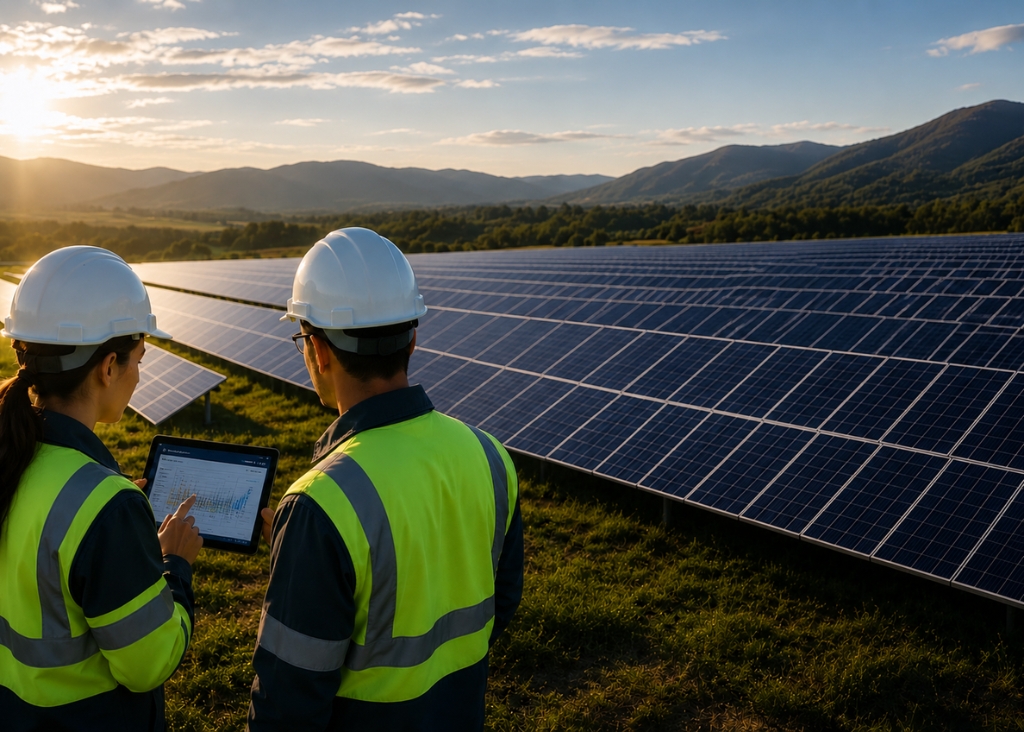
Most solar farms still detect faults the slow way. A panel underperforms for weeks, soiling builds across a string, an inverter trips at 3 AM, and the operator only finds out when the monthly performance report flags the loss. Manual inspection rounds, threshold-based SCADA alarms, and disconnected CMMS tools were never built for utility-scale solar. Agentic AI changes the economics. Instead of waiting for a human to review a thermal scan or a SCADA alert to cross a static limit, autonomous AI agents continuously inspect panels, diagnose faults, and route maintenance across the farm. The outcome is faster response, lower energy losses, and crews that spend their day fixing problems rather than hunting for them. What is agentic AI in solar farm operations? Agentic AI in solar operations is a system of autonomous software agents that perceive site data, decide on actions, and execute tasks with minimal human oversight. Each agent specializes in one function, such as panel inspection, fault diagnosis, work order routing, or performance optimization. Together, they replace the manual loop of monitor, escalate, dispatch, repeat. According to the IEA-PVPS Task 13 report, soiling alone causes a 3 to 5 percent loss in annual PV energy production globally, with economic losses on the order of 3 to 5 billion euros per year (IEA-PVPS, 2022). That is the recoverable prize agentic AI is built to chase. Traditional automation runs on fixed scripts. An alarm fires, a ticket gets created, and a human picks it up. Agentic AI works differently. The agents build dynamic baselines per asset, classify issues by severity, and trigger the right downstream action on their own. Operators already running agentic AI for grid fault detection are now extending the same pattern to generation assets. How agentic AI automates solar panel inspection Panel inspection used to be a labor-intensive cycle of drone flights, image review, and manual ticket creation. Agentic AI compresses that cycle from weeks to hours by handling capture, analysis, and prioritization in one continuous loop. The architecture splits the job across three agents that pass work between themselves without a human stepping in. Drone and thermal image capture Drones equipped with thermal and RGB cameras fly pre-programmed routes across the site. Inspection agents schedule the flights based on weather, irradiance, and the last inspection date. Footage streams to a central data lake the moment the drone lands, ready for the next agent in the chain. Defect classification at the panel level Computer vision agents trained on solar-specific datasets identify hot spots, micro-cracks, soiling, bypass diode failures, and string-level mismatches. Each defect is tagged with location, severity, and probable root cause. Generative AI handles the edge cases that the vision models cannot classify cleanly, so the operator receives a clean defect register instead of raw image files. Severity and revenue-loss scoring Not every defect is worth a truck roll. A scoring agent estimates the energy loss tied to each fault, factors in repair cost, and ranks the queue accordingly. A 5 percent string underperformance during peak generation hours moves up the list. A cosmetic blemish on a back-row panel waits its turn. How agentic AI routes faults to the right crew A defect register is only useful if it triggers the right work, in the right order, with the right people. Fault routing is where agentic AI delivers most of the operational value, because it closes the loop between detection and resolution. Three components keep the loop tight. Fault localization down to the inverter and string Localization agents combine inspection data with SCADA telemetry, IV curve measurements, and inverter logs to pinpoint the exact panel, combiner box, or string causing the loss. Operators stop guessing which section of the farm needs attention and start sending crews to the precise asset. Automated work order generation and dispatch Once a fault is localized, a routing agent creates a work order in Dynamics 365 Field Service, attaches the inspection evidence, recommends parts, and proposes a technician based on skill, location, and current load. The crew gets a complete brief on their mobile device before they leave the depot. A configurable field inspection app captures the on-site verification data so the next inspection cycle starts with cleaner ground truth. Continuous learning from outcomes Every closed work order feeds back into the agents. The system learns which fault patterns the crew confirmed, which were false positives, and how long each repair actually took. Over months, accuracy climbs, and false dispatches drop, which is the metric that matters most for crews already stretched thin. The technology stack behind agentic AI for solar Agentic AI in solar runs on a familiar enterprise stack rather than exotic infrastructure. Most operators already have the foundations in place. The gap is the orchestration layer that lets the agents act, not the underlying tools they act on. For solar operators on Microsoft technology, the practical stack involves Azure for AI model training and inference, Dynamics 365 Field Service for crew dispatch, and Power Platform for the connectors that tie SCADA, drone analytics, and the asset register together. A peripheral automation layer wraps these core systems with the data, process, and AI agent capabilities needed to close the loop, without ripping out the systems your operations team already relies on. Operators looking for a wider digital transformation roadmap for energy and utilities usually start by aligning the asset register and the work order system before introducing agents on top. Executive insights for solar operators evaluating agentic AI A few patterns separate solar operators getting real value from agentic AI from those running glorified pilots. The biggest one is treating it as a workflow problem, not a model problem. Agentic AI is only as good as the work order system it dispatches into. Get the field service backbone clean first, then layer agents on top. Edge cases will always exist. Plan for human review on the top 5 percent of high-severity faults rather than aiming for full automation from day one. Inspection data is more valuable as
Scaling renewable energy operations with cloud ERP and AI
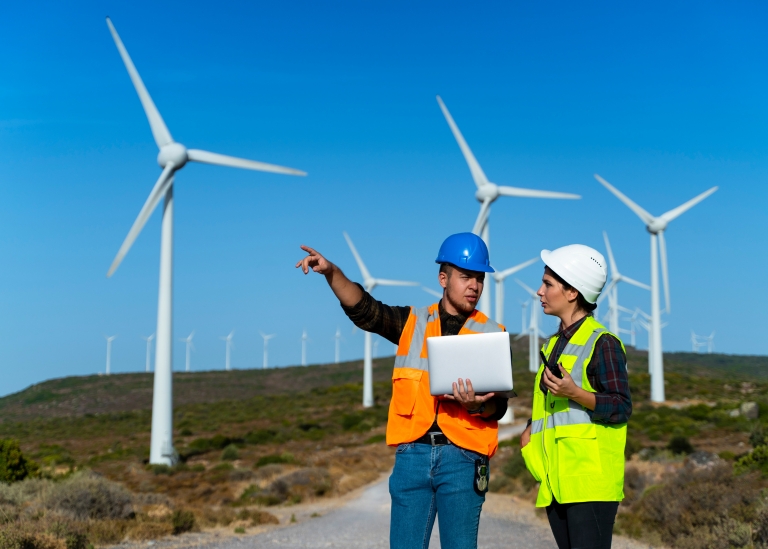
Cloud ERP for renewable energy is the approach of unifying financial management, asset lifecycle tracking, field service coordination, and project delivery into a single cloud-native platform that connects every site in the portfolio, from solar parks and wind farms to battery storage installations and grid interconnection points. For energy CTOs, this means replacing the patchwork of disconnected systems that most operators run: SCADA in one silo, finance in another, maintenance scheduling in a third, and regulatory compliance tracked through manual spreadsheets. When a turbine fault at one site doesn’t automatically trigger a parts order, update the maintenance schedule, and adjust the financial forecast, the operator is flying blind. The renewable energy sector doesn’t have a data problem. It has a systems integration problem that cloud ERP and AI are built to solve. The operational reality: why legacy systems fail at renewable scale Global energy investment reached $3.3 trillion in 2025, with approximately $2.2 trillion going collectively to renewables, nuclear, grids, storage, and electrification, twice as much as the $1.1 trillion going to fossil fuels (IEA / Tech-Stack, 2025). The AI in the renewable energy market alone was valued at $20.63 billion in 2025, projected to reach $26.30 billion in 2026 at a 25.65% CAGR (Tech-Stack, 2026). Yet most renewable operators still manage this growing complexity with systems designed for a simpler era. Why fragmented systems create operational risk Renewable energy firms manage vast networks of geographically dispersed assets, each generating its own data streams from SCADA, IoT sensors, weather stations, and grid interconnection points. Without a unified platform, each site becomes a data island where financial performance, maintenance history, and operational telemetry exist in separate systems that never talk to each other. A DNV report found that 70% of digital leaders in the energy sector plan to expand AI-driven applications (Scalo / DNV, 2025). But AI can’t deliver value when the data it needs is scattered across disconnected tools. Cloud ERP provides the unified data foundation that makes AI-driven operations possible. The cost of disconnection Cloud ERP systems paired with AI-driven workflows can reduce operational costs by 40% to 55% while improving compliance levels by 30% (ResearchGate / AInvest, 2025). Firms investing in digital transformation report 20% to 30% reduction in operational costs and faster time-to-market for new services (StartUs Insights, 2025). 65% of renewable energy companies already use AI for predictive maintenance (Tech-Stack, 2026). The gap is between companies that have connected their operational data into a single platform and those still reconciling spreadsheets across sites every month. Where the industry is heading Predictive maintenance replacing reactive repairs 65% of renewable energy companies already use AI for predictive maintenance (Tech-Stack, 2026). Wind turbine sensors detect subtle vibration changes that signal gear failures weeks in advance. Solar farm operators use drone imaging and AI analysis to identify underperforming panels without manual inspections. These techniques have reduced maintenance costs by roughly 20% while extending equipment lifespans by three to five years (Scalo, 2025). The shift is from scheduled maintenance calendars to condition-based interventions triggered by real-time asset health data flowing through a unified ERP platform. Digital twins for multi-site portfolio optimization Digital twins create virtual replicas of physical assets that simulate extreme weather impact, grid stress scenarios, storage dispatch timing, and mechanical degradation patterns. Operators can test “what-if” conditions without affecting real infrastructure. In the long term, AI could cut power system costs by up to 13% by 2050 (DNV / Scalo, 2025). Cloud-native platforms as the operational backbone IRENA’s report on digitalization identifies five key areas where digital technologies can transform power systems: smart monitoring, AI-enhanced forecasting, operational optimization, demand response automation, and digital transparency platforms (IRENA / WEF, 2025). All five require a connected data foundation that legacy ERP systems can’t provide. How Dynamics 365, Azure AI, and Power BI fit the energy stack Gartner highlighted Microsoft’s integrated cloud stack, uniting Azure, Power BI, and Copilot Studio, as a defining strength in the 2025 Magic Quadrant for Cloud ERP for Product-Centric Enterprises (Gartner / CX Today, 2025). Dynamics 365: unified financial and operational backbone Dynamics 365 Business Central and Project Operations provide the ERP foundation that renewable energy firms need to connect finance, procurement, project delivery, and asset management. Multi-entity support handles firms operating across regions, regulatory jurisdictions, and grid operators. Job costing by project and site connects field activity to financial outcomes in real time. For operators running solar, wind, and storage assets simultaneously, Dynamics 365 provides the single financial ledger that links a turbine’s maintenance cost to the site’s profitability and the portfolio’s return projections. Azure AI and IoT: the intelligence layer Azure IoT Hub ingests telemetry from SCADA systems, weather stations, and asset sensors across every site. Azure Machine Learning trains predictive models on this operational data to forecast equipment failures, optimize generation output, and predict grid curtailment events. Azure Digital Twins creates virtual replicas of energy assets, enabling operators to simulate maintenance scenarios, capacity expansion, and weather impact before making capital commitments. Power BI: portfolio-wide operational dashboards Power BI embeds real-time dashboards inside the Dynamics 365 environment, unifying site-level KPIs, financial health, asset performance, and compliance status into one view. Operations teams see generation vs. forecast, maintenance backlog, and cost variance across the entire portfolio without switching between systems. For multi-site operators, this means the COO sees portfolio health on one screen while site managers drill into their specific assets, all from the same data source. How Advaiya helps energy firms modernize operations Advaiya works with organizations across energy, utilities, and infrastructure on enterprise resource planning and data analytics implementations within the Microsoft ecosystem. When Advaiya deployed a document management system for an airport, the operational challenges mirrored what renewable energy firms face with multi-site complexity: scattered documentation, manual compliance tracking, and inefficient information retrieval across distributed operations. The results demonstrated what infrastructure modernization delivers: 90%+ reduction in manual document handling, 95% compliance index, and 85% reduction in retrieval time (Advaiya Case Study Compendium). Advaiya brings enterprise architecture expertise that connects Dynamics 365, Azure
AI-Powered HSE safety & compliance on construction sites
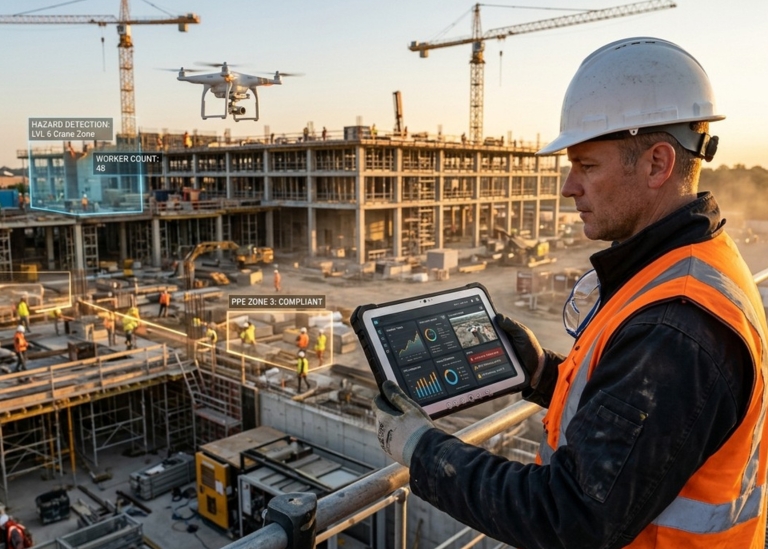
AI-powered HSE management in construction is the shift from periodic manual inspections and paper-based incident reports to continuous, data-driven monitoring that detects hazards in real time, predicts where incidents are most likely to occur, and automates the compliance documentation that regulators require. For construction CTOs, this means replacing the clipboard-and-walkthrough model that can’t keep pace with multi-site complexity. When a safety manager oversees three active job sites with dozens of subcontractors, the gap between inspections is where incidents happen. AI closes that gap by providing continuous visibility into PPE compliance, restricted zone access, equipment condition, and worker behavior patterns across every site simultaneously. The question is no longer whether AI improves construction safety. Companies using AI-powered systems report incident reductions of 40% to 60% (ABC Carolinas / SocialMed.AI, 2025-2026). The question is how fast your HSE operations can adopt it. The safety gap: why traditional approaches aren’t scaling Construction remains the deadliest private sector industry in the United States. In 2023, 1,075 construction workers died on the job, the highest number since 2011 (BLS / ISHN, 2025). Construction accounts for approximately 20% of all workplace fatalities despite representing only 6% of the workforce (BLS / Workyard, 2025). The “Focus Four” hazards (falls, struck-by incidents, electrocutions, and caught-in/between accidents) are responsible for 65% of construction fatalities (BLS / OSHA Practice, 2025). Falls alone account for 38.4% of construction deaths (BLS / Procore, 2022). Fall protection remains the most frequently cited OSHA violation year after year. Why manual safety systems fail at scale 80% to 90% of serious construction injuries are caused by human error (OSHA Outreach Courses, 2025). Over 99% of construction accidents are preventable, yet the manual inspection model can’t provide the continuous monitoring needed to catch errors before they become incidents. Small businesses with 1 to 10 workers account for 57% of fatal injuries, with more than 70% of deadly falls occurring in these settings (OSHA Practice, 2025). The firms with the fewest safety resources face the greatest risk. Safety programs deliver 4x to 6x ROI, while construction fatalities average $1.46 million each and serious injuries average $43,000 (FTQ360, 2025). The cost of the top five injury causes in construction is roughly $7.87 billion in workers’ compensation alone (Kwant AI, 2024). The economic case for proactive safety technology is clear. Where the industry is heading Computer vision for continuous site monitoring AI-powered cameras now detect missing PPE, workers entering restricted zones, and proximity hazards with detection accuracy exceeding 95% for common violations (SocialMed.AI, 2025). Unlike periodic inspections, these systems provide 24/7 monitoring across every camera-equipped area of the site. The practical value extends beyond real-time alerts. Computer vision creates trend visibility: which crews, tasks, times of day, or subcontractors drive repeated safety exposures. That pattern data is what enables targeted interventions before incidents occur. Predictive analytics identifies high-risk conditions Predictive analytics models trained on historical incidents, near-misses, weather data, production schedules, and crew information estimate where and when future incidents are most likely (ABC Carolinas, 2025). A model might identify that struck-by incidents increase during afternoon shifts when specific subcontractors move materials in high-wind conditions, prompting extra supervision before work begins. 28% of EHS functions already use AI, while nearly half plan to invest in AI-enabled capabilities within the next year (Verdantix / Protex AI, 2025). 53% of firms plan to increase AI budgets by at least 10% in 2025, citing cost savings and risk reduction as primary drivers (Verdantix, 2024). Wearables and IoT for worker-level safety Smart helmets, vests, and wristbands now track worker location, detect falls, monitor fatigue through physiological signals, and alert supervisors when someone enters a hazardous zone. A 2025 systematic review confirmed the growing feasibility of using wearables combined with AI to classify fatigue states from ECG, EMG, and other biomarkers (Vanguard EHS, 2026). Automated compliance documentation OSHA’s 2025 requirements expanded electronic submission obligations for companies with 100+ employees and introduced stricter enforcement under the Severe Violator Enforcement Program (Spot AI, 2025). AI systems automatically document safety observations, violations, and corrective actions, reducing administrative burden while ensuring audit-ready records. How Power Platform and Azure fit the construction HSE stack Advaiya’s Project HSE Score Tracker Advaiya built the Project HSE Score Tracker as a Power Platform accelerator specifically designed for construction HSE operations. The tracker provides a centralized scoring system that quantifies safety performance across projects, sites, and subcontractors, turning qualitative safety assessments into measurable, comparable data. The HSE Score Tracker connects safety observations, incident reports, compliance checklists, and corrective actions into a single dashboard where project managers and safety directors see real-time safety health across the entire portfolio. When a site’s HSE score drops below the threshold, the system triggers automated escalation workflows that route to the right decision-maker without waiting for the next scheduled review. Power Platform: automated workflows and mobile field capture Power Apps provides mobile inspection forms that safety managers complete on-site, with photo documentation, GPS tagging, and automated routing to project leads. Power Automate triggers corrective action workflows when violations are logged, assigns follow-up tasks with deadlines, and escalates unresolved items. Power BI embeds safety dashboards inside the project management environment, so HSE data surfaces where operational decisions happen. Azure AI: the intelligence layer Azure Machine Learning trains predictive models on historical incident data, site conditions, and workforce patterns to identify high-risk scenarios before they produce injuries. Azure IoT Hub connects wearable devices and environmental sensors to the central safety platform, providing the continuous data stream that AI models need to move from reactive to predictive. For construction firms running Dynamics 365 Project Operations, the integration means safety data flows alongside project cost, schedule, and resource information, giving leadership a complete view of both project delivery and worker protection. How Advaiya helps construction firms modernize HSE operations Advaiya works with organizations across construction, infrastructure, and energy on business process automation and HSE technology implementations within the Microsoft ecosystem. When Advaiya deployed a document management system for an airport, the operational challenges mirrored what construction firms face with multi-site HSE
Smart factory transformation with AI and automation

Smart factory transformation is the shift from static, hardware-bound production control to adaptive, software-defined manufacturing where AI continuously learns from sensor data, adjusts process parameters in real time, and surfaces operational intelligence that human operators can act on or that autonomous systems act on without human intervention. For manufacturing CTOs, this isn’t about adding another dashboard to the plant floor. It’s about connecting the data streams that already exist from PLCs, SCADA systems, quality inspection stations, energy meters, and supply chain feeds into an intelligence layer that turns 1,812 petabytes of annual manufacturing data (Deloitte) into decisions that reduce downtime, cut energy waste, and improve yield. The challenge isn’t generating data. It’s making it actionable at the speed production demands. The operational reality: Why most factories are still running on fragmented data The investment appetite is real. Deloitte’s 2025 Smart Manufacturing[1] Survey of 600 executives found that 78% allocate more than 20% of their improvement budget to smart manufacturing initiatives, and 88% expect investments to continue or increase in the next fiscal year (Deloitte, 2025). Technology spending is rising fast. Manufacturing companies[2] dedicated 30% of their operating budget to technology in 2024, up from 23% in 2023, with cloud, generative AI, and 5G delivering the highest ROI (Deloitte Digital Maturity Index, 2024). But scaling remains the bottleneck. McKinsey’s State of AI 2025 report found that 88% of organizations use AI in at least one business function, yet only about one-third have scaled it across the enterprise (McKinsey, 2025). Nearly 70% of manufacturers say data quality, contextualization, and validation are the most significant obstacles to AI implementation (Deloitte, 2025). The cost of inaction is measurable. Unplanned downtime costs manufacturers globally over $50 billion annually (Deloitte, 2024). Poor maintenance strategies alone can reduce a plant’s overall production capacity by 20% (Deloitte). And in energy-intensive sectors like cement manufacturing, where energy costs represent roughly 40% of total production cost, even a 5% improvement in kiln thermal efficiency or clinker ratio optimization translates directly to margin. Meanwhile, 62% of CIOs say their legacy operating models fail to support strategic goals (Gartner, 2025). The gap between investment intent and operational reality is where most manufacturing AI initiatives stall. Where the industry is heading Three capabilities are defining the next generation of manufacturing operations. The first is predictive maintenance, moving from pilot to plant-wide deployment. McKinsey estimates predictive maintenance can cut downtime by up to 50% and lower maintenance costs by 15–30% (McKinsey, 2025). Deloitte found that companies adopting AI-driven predictive maintenance reduce equipment breakdowns by up to 70% (Deloitte / Prolifics, 2025). A 2025 Gartner report projects that 70% of manufacturers will adopt AI-driven predictive maintenance by year-end, up from 45% in 2023 (Gartner, 2025). The second is AI-powered process optimization, particularly in energy-intensive operations. In cement manufacturing, AI-driven kiln optimization adjusts feed rates, fuel injection, and air flow in real time based on clinker quality targets and thermal efficiency readings. The same principle applies across heavy manufacturing: AI models trained on process historian data identify parameter combinations that reduce energy consumption, improve yield, and minimize waste continuously, not quarterly. The third is the convergence of digital twins, edge AI, and unified data architectures. Digital twins can slash maintenance costs by up to 40% while boosting asset uptime 5–10% (McKinsey). Edge AI processes sensor data locally for millisecond-level response times. And unified namespace (UNS) architectures standardizing data from legacy PLCs, modern IoT sensors, and enterprise systems into a single contextual layer are replacing the fragmented data silos that have limited factory intelligence for decades (Cognizant, 2026). How Azure AI, Databricks, and Power BI fit manufacturing’s intelligence stack The Microsoft and Databricks ecosystem provides the infrastructure layer that manufacturing AI initiatives require, from data ingestion and model training through operational dashboards and edge deployment. Azure IoT Hub and Azure Digital Twins connect factory-floor sensors, PLCs, and SCADA systems to the cloud, creating the real-time data pipeline that feeds predictive maintenance models, process optimization algorithms, and quality inspection AI. For plants with legacy infrastructure, Azure IoT Edge runs inference models locally, delivering millisecond response times without requiring full cloud connectivity. Databricks provides the lakehouse architecture where manufacturing data, process historian logs, energy meter readings, quality lab results, and supply chain feeds get unified, cleaned, and contextualized. This directly addresses the data quality problem that 70% of manufacturers cite as their top AI obstacle. For cement plants, this means combining kiln temperature profiles, raw meal composition data, GGBS blending ratios, and energy consumption logs into a single analytical environment. Power BI delivers the operational visibility layer. Real-time dashboards surface OEE trends, energy consumption per ton, predictive maintenance alerts, and quality metrics, giving plant managers and CTOs the same view of operations without waiting for shift-end reports. When connected to Databricks-trained models, Power BI dashboards don’t just report what happened. They predict what’s about to happen. Together, this stack turns fragmented factory data into continuous operational intelligence, the foundation for scaling AI from pilot to plant-wide. How Advaiya helps manufacturers build AI-ready operations Advaiya works with organizations across manufacturing, energy, and infrastructure on data and AI implementations within the Microsoft ecosystem. When Advaiya built an ESG reporting board for a diversified conglomerate tracking 20+ KPIs across 300+ data validation workflows with 90%+ reduction in manual work and a 95% data quality index, the challenge mirrored what manufacturers face: unifying fragmented data sources, ensuring data quality across operational systems, and delivering real-time visibility to leadership (Advaiya Case Study Compendium). Advaiya brings enterprise architecture expertise that connects manufacturing process requirements to Azure, Databricks, and Power BI configuration so the intelligence stack reflects how your plant operations, maintenance, quality, and energy management teams actually work. Connect with Advaiya about manufacturing AI → FAQs What's the typical ROI timeline for AI in manufacturing? Most high-impact systems achieve payback within 6–18 months, with the first measurable value often visible in 6–10 weeks for modular deployments. Can AI work with legacy PLCs and SCADA systems? Yes, Azure IoT Edge and hub architectures connect to