How the HR sector is leveraging data better using HR analytics

Companies produce a lot of HR data. Especially in larger organizations with a big employee base, HR is a significant part of operations. Human resource data can be used by businesses to track trends and measure productivity or identify growth areas. Many businesses don’t leverage this data enough. This can lead to decisions that are not in line with the capabilities or capacities of the human capital. In manpower-oriented companies, particularly in the service sector, HR KPIs are very relevant to business goals. Business leaders and managers can use human resource analytics and KPIs to make the most of valuable insights. KPI reports are visual representations of key performance indicators data. This format makes it easy to analyze and provides immediate insight. Advaiya’s BI and analytics solutions provide HR Analytics dashboards that include reports, and analytics features. In HR analytics software, all your reports can be found in one location. All your data is consolidated, and you can access it all at once, which speeds up data collection and improves efficiency. Using data analytics in human resource management The HR department in traditional terms is often seen as old-fashioned and most HR work is based on intuition. For a long time, HR has done things in the same way and because HR is not known for bringing in revenue like sales or operations we typically don’t think about measuring or quantifying its success. However, this is possible through HR data analytics. Many of the problems we have just mentioned can be solved by being more data-driven and knowledgeable about HR and analytics. Let’s ask a few questions: What is the annual turnover of your employees? What percentage of your turnover is due to regrettable loss? Are you able to predict which employees are most likely to leave your company in the next year? These questions cannot be answered without HR data. The first question is easy to answer for most human resource professionals. However, answering the second question can be more difficult. This second question requires you to combine data from multiple sources, such as Human Resources Information System (HRIS), and a performance management system. This is where HR analysis tools and dashboards come in. Analytics in HR provides insights into the best ways to manage employees and achieve business goals. It is crucial for HR teams they first identify the most relevant data and how to use it to maximize ROI. An HR analysis software can help you understand your business and assist you in developing plans to optimize talent investment while effectively monitoring recruitment, development, accountability, retention, and other workplace initiatives. How can HR Analytics help organizations track their employee KPIs? Employee engagement KPI – Absenteeism rate The absenteeism rate is an indicator that measures the absence rate for employees due to delays, sick leave, or excused absences. This indicator will help you plan for future absences and adjust your business strategy in order to avoid them. The average hour worked data can be used by HR managers to calculate key HR KPIs. This will allow you to see the cost impact of absenteeism. It will be much easier to budget for preventative strategies once the true cost of absenteeism has been established. Talent rating HR analytics can help identify high-performing new hires. This meaningful insight helps to determine if they should move into fast-track programs. Average stay Many employees leave because they don’t have enough time to stay in the same job. Many employees will look for opportunities outside the company if they aren’t promoted. HR analytics help you identify the average time it takes an employee. It will ascend, simply count the time it takes each employee to complete the same task. To divide the result by all employees. It might be a good idea for you to talk with management if there are not many opportunities for growth in the company. Explore our live HR analytics dashboard example Productivity KPI – KPIs that measure the efficiency of your workforce include the employee productivity rate. This KPI measures efficiency by calculating how long it takes employees to accomplish a task or achieve a goal. It determines the efficiency of each employee’s output and the speed at which they can complete the task. It can be used by HR departments to determine if operational adjustments are necessary to improve employee as well as enterprise productivity. This KPI is difficult to quantify as it only measures the work done. Some sectors may find it difficult to add quality measures to the output. It’s often difficult to measure quality. However, with business intelligence tools for HR, HRs can measure the metrics and indicate how productive a team is. Sociological KPI– Sociology gives managers the necessary knowledge to understand their customers and employees. Sociology knowledge allows business leaders to respond to employee problems and meet customer needs in a way that is not possible for others. Sociology at work can help you cultivate innovation and increase your competitive advantage. Companies are working to reduce gender inequality and reap the benefits of gender diversity within their companies. It is important to understand the size of the gap and its causes in order to close it. Many companies lack sociological data about their talent pipeline and their workforce over time. They are unable to pinpoint problems and launch targeted interventions to address them. While monitoring the gender pay gap is a useful baseline measure, it doesn’t provide enough information. Advanced analytics is required to enable organizations to measure sociological metrics such as gender diversity by role and female-to-male ratio, ethnic diversity, and turnover rate per group. This will help them improve their work culture. Recruitment KPI – The recruitment KPIs enable HR professionals to optimize their recruiting process, increase productivity, and improve their performance. In-the-moment actionable insights such as employee turnover rate and cost per hire, conversion rates, dismissal rates, time-to-fill, part-time employees, and other metrics allow HR professionals to make smart strategic decisions in order to achieve their recruitment goals.
Unlocking the potential of data in the oil and gas industry

The oil and natural gas industry is heavily driven by data. Everything from the drilling rigs to the pipelines to the refineries and beyond has to be closely monitored. This is after all dealing with the most precious of natural resources. Companies in the oil and gas sector are constantly trying to find new ways to better their performance through more updated systems and modern methods. There’s a lot of logistics and process control involved which employs sensors, gauges and other infrastructure to collect the data across the system. Data can be collected in a variety of formats, including structured, unstructured and semi-structured data. However, data is not of much value unless it’s broken down and examined. The oil and gas industry uses large amounts of continuous data for various purposes. Real-life use cases of data analytics in the oil and gas industry Data analytics is a major skill set in the oil and gas sector, whether it’s for the improvement of ROI or for health, safety and environmental measures. Processes in the oil industry depend on the ability to understand and predict future supply, demand and production challenges. This is why many oil companies have found it beneficial to invest in advanced analytics and forecasting. Due to the industry’s increasing dependence on data and the need for new frontiers in research and production, oil and gas have realized the importance of state-of-the-art analytics. Reduce production costs Many factors have an impact on the overall finances when it comes to oil and gas industry production costs. The production costs of oil and gas companies are affected by logistics, drilling wells, and laying pipelines. Data analytics for oil and gas increase production efficiency. This is used to lower or stabilize production costs. Companies use rock analysis techniques to locate reservoirs. Predictive analytics tools are used to process data from nearby oil wells. This allows oil production data to be paired with a downhole to adjust the boiling strategy. Increase equipment life span with predictive analytics Shell collects tons of sensor data and performs advanced analysis on the machinery at drilling sites to improve performance and determine what equipment needs maintenance. This results in a longer drilling duration and fewer stops. Shell is the only company to have saved over $1,000,000 using sensor analytics. Reduce net carbon footprint According to Shell’s most recent sustainability report, the company supports the vision of a net zero emissions energy system. The company intends to reduce emissions by using carbon capture and storage technology powered by big data software. Ensuring worker safety One of the most important concerns in the oil and gas industry is the safety of workers and the environment during drilling. There is always the risk that employees may be permanently or fatally harmed by hazardous fumes when they are being extracted. Oil and gas companies use Big Data and predictive analytics to find new sources of oil or gas. This is without the need to undergo potentially dangerous procedures in order to reduce this risk. Oil and gas data analytics for upstream, midstream and downstream optimization: Sector upstream Manage seismic data. Upstream analytics starts with the acquisition of seismic data (collected using sensors) over a potential area for searching for petroleum sources. After the data has been collected, it is processed to identify a site for drilling. You can combine seismic data with other data sets, such as historical data from a company on past drilling operations, research data, and so forth to determine the oil and gas content of oil reservoirs. Optimize drilling processes. To optimize drilling operations, you can customize predictive models to predict potential equipment failures. The equipment is equipped with sensors that collect data during drilling operations. These data are combined with metadata about the equipment (model, operational settings etc.). This data is then run through machine learning algorithms to determine usage patterns most likely to lead to breakdowns. Want information about our data analytics solutions? Click here. Improve reservoir engineering. There are many downhole sensors available (temperature sensors and acoustic sensors, among others). Companies can collect the data they need to increase reservoir production. Companies can use data analytics solutions to develop reservoir management apps to gain timely and actionable information on changes in reservoir pressure, temperature and flow. This will allow them to improve their reservoir performance and profitability. Sector midstream The logistics of the petroleum industry are extremely complex. It is important to minimize risk and ensure that oil and gas are transported safely. To ensure safe logistics, companies use sensor analytics. Predictive maintenance software analyses sensor data from tankers and pipelines to identify abnormalities such as fatigue cracks, stress corrosion, seismic ground movement, etc. This allows for the prevention of accidents. Downstream The downtime of machinery in industries is an unplanned event that interrupts production for a period. This could happen for any reason, including malfunction, repair or changeover of equipment or tools. Oil and gas industries use predictive analytics to forecast downtime. They do this by using simulation data that builds prediction data. Predictive maintenance techniques are used by oil and gas companies to reduce the cost of unexpected reactive maintenance. These forecasts give updates about optimizing downtimes for large-scale maintenance operations well before the downtime event occurs. This could help protect machinery and reduce production losses. Unlock big data potential to leverage data better Data analytics allows companies to transform huge datasets into sound oil-and-gas exploration decisions. This results in lower operational costs, longer equipment life, and a lower environmental impact. Advaiya’s data analytics consulting team can help you secure the benefits mentioned above. For more information about our Oil and Gas data analytics solutions, schedule a free consultation. Chiranjibi Kunda Chiranjibi Kunda is an Associate in BI & Analytics team at Advaiya. He is a Microsoft certified data analyst specialized in analytics, reporting and analytical tools that work seamlessly with business intelligence, data warehousing, architecture, data modelling, and cloud solutions to create effective solution models and optimize the operations.
4 best ways to process BI reports
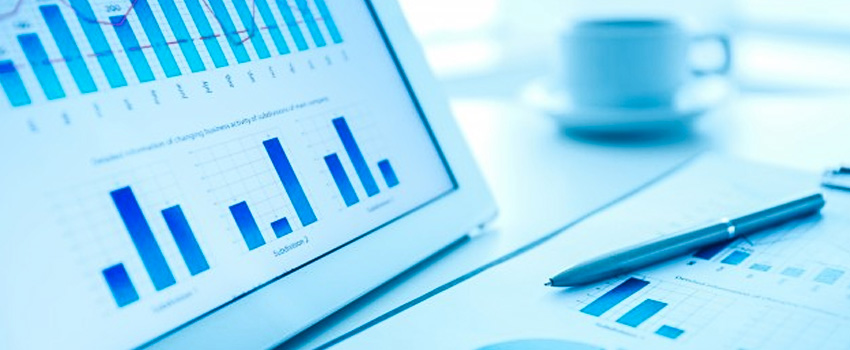
BI reporting is referred to the process of providing information or reports to end -users through a BI solution. Business intelligence reporting can give any organization complete control over all its data, helping to drive more valuable insights and empower employees to meet and even exceed their goals. Here is what BI reporting can do for you: It makes data analysis fast, accessible, and hassle-free. BI reporting platforms are extremely easy to use. You can build dynamic charts, graphs, custom dashboards and generate reports in a matter of minutes. Within the copious amounts of data, you can find the answers you need immediately. For example, Microsoft’s Power BI provides natural language query. Just type in a natural question and watch Power BI produce the exact data you asked for. Some of the best BI reporting tools enable you to take your data on the road. The Power BI mobile app gives you access to all your analytics wherever you go. It increases collaboration across the board. BI reporting platform helps you bring all your data under one roof. This ensures everyone can finally work together on the same data and changes are reflected in real-time. Allows you to share your data insights intelligently. Unlike manual reporting, BI reporting enables flexible controls that let you send the exact data you want to the exact people you want in the exact way you want. The most up-to-date analytics anywhere. Only BI reporting can give you real-time data analysis, ensuring your employees are never left behind. It lets you manage all your data with ease. BI reporting allows you to curate your content with accuracy. You can easily control access permissions per user, data source, or even individual lines on a report. It also enables you to build a holistic data governance strategy. You can create a data management plan in line with your organization with auditing controls. Stop worrying about your data’s security. With more data controls, as well as secure infrastructure provided by BI platforms these days, you can rest easy. Want information about our BI reports and dashboards solutions? Click here It saves you both money and time. Look for platforms that offer value for every buck you spend. One of which we can confidently talk about is Microsoft’s Power BI. The competition can’t touch its value. No other product offers as much power for as little price as Power BI. Don’t get distracted by data spikes. BI reporting platforms will also automatically manage unexpectedly high data loads for you. Microsoft Power BI can give your organization insights that will drive its future growth and has all the above-mentioned features. If you want to learn more about it, try taking a guided learning experience through all its features or sign up for a free demo. Now get out there and go convince your boss! Romi Mahajan I’m an accidental marketer. My skills are in building deep relationships, seeing markets before they burgeon, and in applying socio-political concepts to business. I have 3 pillars on which I pursue opportunities: People, Impact, and Autonomy.