
How your organization should draw the benefits of remote work

At a glance: How modern cloud-based business productivity solutions are revolutionizing the way of working remotely How technology is enabling organizations to manage staff online and reduce office overload. Helping business improve their enterprise productivity by maintaining effective communication between team members as well as clients. Providing great flexibility and improved employee experience by addressing the needs of remote workers Hybrid work became a norm during the pandemic as companies tried to cope with the lockdowns and travel restrictions. Employees not being able to come to the office or go meet the clients were initially seen as a crippling situation, but it quickly became an advantage with a leap in modern workplace technology. Modern organizations now have access to the kind of infrastructure needed to adopt hybrid work, thanks to the availability of modern work management and business productivity solutions like cloud applications. In fact, data suggests that the number of patents filed for technologies that support remote-work capabilities has doubled since 2020. This has remarkably improved the applications and software products that aid in online collaborations, digital data, and document management. The biggest example is the marked enhancement in features and capabilities of Microsoft Teams since its launch in 2017: The meeting recording features became refined Meeting transcription quality improved and became a default feature Earlier, there were restrictions on the number of participants. Now we can host up to 100-200 participants easily Meeting duration cap was removed. We can have long meetings on Teams now Overall network latency reduced, which allows for better screen sharing and collaboration The video and audio calling quality was improved Background noise cancellation ensures that you can effectively participate in calls, even from noisy environments Auto-join, auto-recording, and attendance report functionalities reduce the moderation efforts Now, even external participants can join easily without needing to have a Teams login. Browser capabilities have improved remarkably Overall processing requirements to run these applications are better optimized According to projections, SMEs will spend more than US$100 billion over the next few years on collaboration platforms, cybersecurity solutions, and cloud-based apps. This technology is a part of our daily lives now. Modern tech is used to run schools, hospitals, offices, and colleges. You can now work anywhere you want, collaborate seamlessly, offer enhanced customer service, and learn new skills online. How remote work has evolved Remote work was possible with the basic tools available before. There were always email and chat applications. Things like Dropbox and Google Drive were allowing data and document sharing. However, they were not integrated into a comprehensive suite of applications. Things had to be managed on separate disconnected platforms. For that reason, it was thought to be cumbersome and inefficient. It was fine to hire a part-time freelancer for remote work, but we were not used to seeing “remote” full-time positions at companies. Now, we have broken that barrier. Technology has made it possible to do the same job, no matter where we live. It has allowed us to always stay in touch with clients and coworkers. Reduce your office overhead According to a Gallup survey, 43% of employed Americans said they have spent at least some time remotely.” This means companies have already understood the benefit of remote work. They can more economically manage staff online than hire people for a particular location. Maintaining full-time office spaces is expensive. Think of the electricity bills you will save. HR can save relocation bonuses, transportation and conveyance allowances, and many such expenses. Improve productivity You’d agree that most of the time spent by employees in the office goes into doing unproductive work like gossip, unnecessary discussions, and just idling. It’s because the actual time to do things that are necessary is much less than the working hours. Having a remote workforce can help your team members get on to the priority tasks with to-the-point communication. They can also track their performance with productivity tools like planners and task managers. Enterprise productivity solutions can be used by organizations to maintain effective communication between team members. Greater flexibility and improved employee experience Companies are projecting themselves to be modern and progressive by adopting hybrid work culture and sophisticated workplace productivity solutions to address the needs of remote workers. Employees working remotely, whether they are in coworking spaces, at home, or elsewhere, can benefit from videoconferencing, file-sharing platforms, and project management tools. Want information about our business productivity solutions? Click here. In times of global crises like pandemics and geo-political turmoil, many see the option of working from home as a safe and considerate way of working. Companies willing to be flexible about working hours, location, and time zones are more lucrative as employers. Are you looking for a business productivity services partner? Advaiya provides digital transformation solutions for enterprise-level organizations. Our team includes certified professionals who can customize and implement the latest business productivity solutions according to your business needs. Saurav Pranay Saurav is a Microsoft certified member for Dynamic and Project Online and has over fifteen years of experience in Project and Process management and has been involved in many Dynamics and Project Online implementations and have addressed solutions to challenging business needs by clients.
Create business apps at ease with PowerApps

Digital transformation is the key for any business to become fast growing and successful. When we speak of digital transformations latest technologies take a center stage. In this era where transformation is the new constant, it is crucial for every company to stay updated in technology. PowerApps helps in giving this agility to your business. This technology will reduce the time you consume to build apps from months to hours. It will help you overcome the problems faced while building business apps like high cost, inability to build it in house, issues in development, integration complications, security concerns and many more by building apps using PowerApps. In this article let’s explore what is Microsoft PowerApps, how it works, and how is it helpful for your business: About Microsoft PowerApps PowerApps is a unique solution to many problems, a platform to meet the growing business needs. When other app platforms fail to perform, PowerApps keeps going as it is platform independent. Many organizations at present are transforming their business with PowerApps – a service to create or customize data-driven and task-specific enterprise apps. PowerApps is used to connect, create and publish apps within team on variety of platforms such as Android, iOS, Windows 10 (Modern Apps), as well as on the web in minutes thereby reducing resources, development costs by 70% and increasing overall business efficiency and ROI. PowerApps supports cameras, GPS, barcode scanning and orientation which is used to collect any kind of information that can be used or saved to any data sources online/on-premises. Connecting to data It attracts nontechnical and business users enabling them to store data to a number of data sources, such as cloud databases, Dynamics 365, Excel, OneDrive, web services and on-premises SQL etc. It allows us to create mini apps by connecting to data and work across web and mobile. PowerApps has the ability to connect to data sources like SharePoint, Dynamics 365, SQL, Salesforce, etc. without the need for integration. With 230+ built in connectors and custom connectors, connecting to data has become simple. Also, there is on-premises data gateway to connect to on-premises data like SQL, SharePoint, Oracle etc. Easy to Use/Build Applications build with PowerApps can be anything from simple to complex and can support multiple platforms. PowerApps is a “no-code” application. It eliminates the burden for users to customize forms, screens regardless of browser / OS. The app has an easy to use UI with drag-and-drop and point-and-click features, which makes the process of developing business apps easy. Role of Microsoft Flow Microsoft Flow (workflow) is important as it is the program that runs behind the apps we create. It can be used to automate several processes like sending a notification, reminder emails, etc. For example, if a new document is added to the SharePoint library, Microsoft Flow plays a role in sending a notification to Outlook, Slack or any other application where you want to be notified. “With PowerApps, we gain the ability to rapidly iterate, innovate and publish solutions that better connect employees.” PowerApps as an app is useful for viewing and editing data, while Microsoft Flow helps in performing actions. If you need any help in development of Apps or it’s customization our team of experts can help you.
Quantarium’s REAL AI for REAL Estate

At Advaiya, we have the pleasure of running across dozens of amazing companies- in technology, services, and product development. These companies range from fledgling startups to the world’s largest technology companies. With such a large range at play, one might ask what the commonalities are. Indeed, that is the million-dollar question- what is the taproot of greatness in companies of any size? A common answer is “People.” Great people make great companies, or so the logic goes. We believe this is true but only partly so. We believe strongly that the sine qua non of greatness is a combination of people and timing. Markets are dynamic- they change. No doubt, this dynamism does not necessarily spell doom for the incumbents but it does bring into question the need for timed adaptation. The history of business is littered with the carcasses of projects and companies that were “too soon” or “too late.” These stories needn’t bear recitation- we’ve all heard about these “Kodak Moments” a lot. Given this, we get excited when we find companies that seem to have their timing perfectly aligned with Market dynamics. One such company is Quantarium, an Artificial Intelligence company in Bellevue, WA. With a team of Data Scientists, Mathematicians, Commercial Executives, and Entrepreneurs, Quantarium applies AI to the vast and important residential real estate industry. The numbers are staggering- residential real estate is the world’s largest asset class, with a world-wide estimated value of almost $200 Trillion. In the United States, this number is closer to $30 Trillion. Despite the size of the asset-class and market, real estate data is still a developing business. Traditional parts of the Real Estate value chain are often isolated from one another and no particular part has comprehensive, timely, and contextual data at its disposal- in an actionable and time-sensitive set up. This is partly due to infrastructure, partly to culture, and partly because the questions surrounding Real Estate are incredibly complex. Indeed, we find that AI, Deep Learning, and scientific Big Data management are necessary to create an accurate and repeatable analytics platform in this multi-variate industry. That’s why we love Quantarium. With the largest and most sophisticated Data Lake in the business and with the speed, scale, and insight driven by AI, they are enhancing the industry. Consider for instance their AVM solution– the best in class- which helps mortgage owners, Banks, and other financial institutions value their residential real estate assets or their Portfolio Analytics that allows for propensity models, if/then scenarios, and other focused and relevant solutions- game-changing solutions that are directly applicable to today’s housing market. This brings us back to the notion of timeliness. Not all claims around Data and AI were paid off in reality; claims abound. Quantarium however developed these solutions painstakingly and got them right before releasing them into the wild. We believe timing is on their side. We are impressed but not robotic cheerleaders. Much remains to be seen, but from our vantage point, Quantarium is a Real AI company that offers Real value to one of the largest markets on the planet. We, at Advaiya, are happy to be a trusted partner of Quantarium supporting their solution vision for Data and AI in the Real Estate industry.
Developing Chatbots using Microsoft Bot Framework and LUIS

The blog describes Microsoft BOT framework, LUIS (language understanding intelligent service), architecture and components, and how conversations can be created with BOTs.
Stop emails from spam with the Email Before Download plugin

Are you still struggling with the problem of emails going into spam while using Email Before Download (EBD) plugin for WordPress? If you are looking for an actual solution, here you go! Mail is marked as spam due to various reasons, and some of them are links in the email body, spam text/words in the email body, downloadable link, attachment, and much more. In the case of EBD, we have a solution. The idea is to change the dynamic URL in the email. With the help of code, change the URL which is sent by EBD into email body and upon click, rewrite the URL to the desired format of EBD using htaccess file. The most probable reason for getting such emails marked as spam by the firewalls is the terms used in the text. With this approach, the spam issue gets resolved and email lands into an individual’s Inbox. With the EDB plugin, the dynamic URL being generated is of the format: www.example.com/email-before-download/download.php?i=xyz and below are some steps to rewrite such URL in case of EBD: 1. Open email-before-download.php plugin file from plugin directory 2. Go to line # 531 where URL variable used contains the URL like $url = WP_PLUGIN_URL.”/email-before-download/download.php?dl=”.$uid; Change this using the below code: $url = site_url().”/downloadable/”.$uid; 3. Save file 4. Open .htaccess from root folder of your website Add the below code at the end: RewriteRule ^downloadable/([^/]*)$ wp-content/plugins/email-before-download/download.php?dl=$1 [QSA] 5. Save this file 6. Now refresh/reload page where download form is used. Fill the form and check if the email is sent into inbox. Hope this helps and if you still facing any issue, please add your comment below or write to me athemendra.ajmera@advaiya.com and we can try to fix it.
Top Inbound Marketing Strategies that Drive High ROI

Inbound marketing is one of the most effective marketing strategies to bring potential customers to your business. It’s not only about creating and sharing the content with the world, but creating robust content that enhances engagement on the social channel for more chance of attracting the audience to your business. Inbound marketing focuses on creating quality content that drives people towards your company and products. Below are the top inbound marketing strategies that can help you drive more leads for your business.
1: Give away free guides – based on target audience
The Free Guide written by keeping target audience’s business concern is sure to gain high exposure. Creating advanced guide drives industry specific traffic as these contain target keywords, making them a huge source of organic traffic. Many marketers and great blogs are using this technique to build their email lists, like Hubspot. HubSpot’s marketing resources like PPT, PDF and whitepapers are a good example of free guides they published to market their products.
For example, freebies at HubSpot:

2: Engage your social audience with questions and answers

Image Source: Buzzsumo.com
3: Pick right keywords for your services and optimize them to rank higher
SEO is a part of the overall inbound marketing strategies. To successfully gain traffic for relevant keywords, you must use those keywords on your website. One thing to keep in mind is – gain good-position results from the most common searched terms that people search. But of course, you’re not going to gain the top position on Search Engine for “Microsoft” or “Android.”
It is good to have a comprehensive keywords list that focuses on your business domain so that you can track and do targeting easily. To achieve a high rank on a target keyword, one should focus on a few keywords that are profitable to your business, and create specific landing pages on your website related to that service that includes all related keywords.
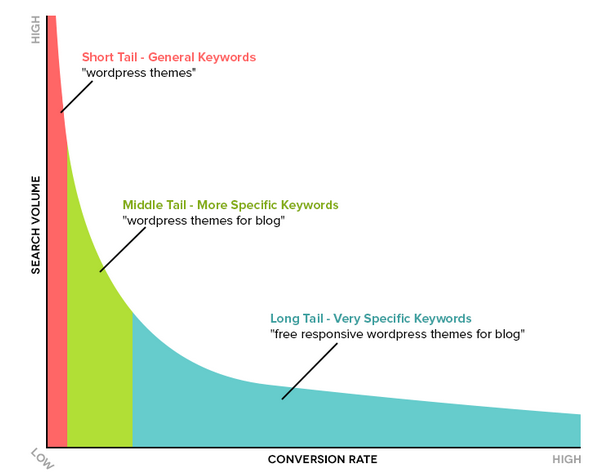
Image Source: seopressor.com
4: Guest blog right way to get your brand mentioned by big brands
Blogging has been considered as one of the best ways to spread knowledge and grow an online business, but still a lot of people are confused about guest blogging. Guest blogging is a great way to build a brand and take the business to the next level. It can help you in the following ways:
1. You get backlinks from high authority sites.
2. People look up to you as subject matter specialist.
3. Increase referral traffic to your website.

5: Create an Email Popup to increase your subscribers
Having popups on the website is sometimes hated by people. But, if you want to grow your list of subscribers, then use a popup opt-in form. The email popup is a wonderful way to promote your freebies whitepapers, PDFs, newsletters, and is sure to get satisfactory results. For example, ShopifyNation is successful using popup opt-in to increase their subscribers.

Image Source: seopressor.com
Conclusion
There are many ways to grow your business using inbound marketing strategies. Above listed are some points to start with and reach your target audience bang on. You can try these inbound marketing strategies for six months, and see the impact on your business. Based on the results, you can customize strategies based on what works best for you.
Growing Your Business Through Digital Commerce Strategies

It sounds very simple. And yet, I speak with many customers that ponder how to get their commerce strategy off the ground or don’t see the gains because of poor execution choices. There is no doubt that a clear digital commerce strategy based on data driven scenarios when executed well can result in amazing business growth and customers coming back for more!
Let’s validate the strategy.
It starts with understanding the key metrics of your business – which means a foundation of data-driven culture. Having a dashboard view of who your buyers are, how customers buy from you, what they buy (profitable/high margin products) and where the sales are coming from – I call these your commerce scenarios. Knowing your core customer buying scenarios (B2B or B2C) will set your commerce strategy on the right path. There are several cheat sheets and methods available to help an organization document these scenarios.
Now let’s talk about enacting those scenarios. I am a believer in a “rapid launch and learn” methodology. There is no better substitute to real-world customer feedback. My view is to identify your top scenarios, get your commerce site up and then measure performance. This allows you to listen to your customers and alter your product mix/experience based on feedback. Once again, I repeat data-driven approach is the essence of this strategy.
Lastly, let’s talk about alignment – this is making sure that your organization’s internal systems, processes, and people are aligned to interact digitally with your customers and in sync with your digital strategy. Do you have the right value messages for your internal teams that resonate with the market? Do you have the right incentives in place to drive that digital strategy you are enacting? For example, your CSRs taking orders on paper, or your sales people driving direct sales because online does not count against their quota, these are some examples of poor alignment.
For a typical B2B buyer, there are three key factors to consider. Is your prospective buyer able to use your site effectively to find the right product? – Search with filters & keywords is the #1 priority. Secondly, the depth of information offered about the product makes your site the preferred destination for your B2B buyer. Lastly, ease of buying closes the loop to ensure your customer keeps coming back for more – remember “reorder” is a key scenario for a B2B buyer.
Now you have the essential ingredients to enact your commerce strategy.
The Hard Truth About Social Media and What You Need to Do About It

Today social media accounts validate our existence, our relationships, our friendships, our achievements, our promotions, our business trips, our vacations, our lifestyle and everything a consumer is. What more does a marketer want? The target audience is an open book on social media platforms. Not only will they share their geographic & demographic information but will also share their psychographic and behavioral traits. Marketers & companies today reach out to millions of these consumers through social media platforms, engage with them to ultimately achieve conversions. And this has been a very effective and efficient marketing model so far. But is that all? Every coin has a flip side and so is true with social media. Today I will share five hard truths about social media and what you need to do about it? Algorithms: All social media platforms especially Facebook today runs on a very strict algorithm. It has almost brought down my organic brand engagement to nil and has reduced the organic reach significantly. As you pay, as you get is the mantra today. What we marketers can do about this is create viral content. Content that a consumer can’t resist but share. Content could be funny, could be emotional, could be informational. Bring the shareability quotient in your content, and you will receive huge talking points and mentions about your brand. Touch the emotional or intellectual chord. This could be done for content that you would not want to boost. Choose your channels well: Your target audience could be everywhere. But make sure you don’t start putting money in all the channels. While Facebook Ads & Facebook sponsored posts could bring you website traffic, but Instagram sponsored ads and posts bring visibility and engagement. Stop treating every channel as a sales funnel. You would only end up burning money. Choose your channels well. Social Media cannot alone run the party: It is critical to understand that social media is one element of marketing. It alone cannot host a successful party. Club your social media efforts with email marketing, newsletters and search engine optimization. Reviews: Social media could bring you many likes and comments which will boost your brand’s confidence but also will it bring a few negative reviews just enough to spoil the brand’s reputation. Unhappy consumers slapping negative reviews on your Facebook wall or Twitter handle could bring you a run for your money, and all this could be done by just one tweet or just one bad review. Concentrate on giving excellent services, handling grievances on social media swiftly and responsibly. #Indianrailways and Sushma Swaraj has been quite a good examples these days. Data: It’s not a consumer acquired unless he buys the second time. Measure, measure, measure! Analyze data on a regular basis. What it looks is not always the case. Social media analytics gives you a whole bunch of data. Sometimes more than what you need. Choose your metrics well and then analyze. High bounce rate could be a result of not only an ineffective ad but also a slow page load time. Connect Google Analytics with your social media pages to get a near accurate measure of your efforts. Social Media is a multi-discipline ecosystem that requires an understanding of how it all fits together. Engage, Act, Convert, Measure, Repeat Purchase all need to be in the mix.
How To Market Technology In Digital Era

Marketing of technology or technology-driven products/services is substantially different than the marketing of other goods and services. Technology Marketing is one of the most fascinating and dynamic of all the marketing verticals. It is based on the combination and aggregation of technical depth and business understanding, with the appreciation of decision-making patterns. Technology buying, especially in businesses—which is the most important consumer of information-driven marketing—is predicated on realizing its value in complex contexts. A technology marketer is enabled by digital technologies to address the multiplicities of buyer’s journey. The decision-making approaches, processes and influences vary greatly by the type of technologies, usage, business purpose, and decision-making context. The technology marketer, for example, would do well by enabling immersion and extensive information where the business purposes are critical and technology approaches have matured. On the other hand, leap-of-faith situations such as adopting newer technology approaches or building a newer business model, might require a collaborative exploration approach requiring deeper involvement in the customer’s business models. Technology marketers benefit greatly as they assimilate and adopt the digital trends. These trends harbinger significant changes in the market and the product, and at the same time necessitate the change in how technology is marketed. The important insights include increasing consumerization, importance of audience centricity, use of data and analytics, social media and changing preferences of capital and operational expenditures. Emerging digital trends, changing customer preferences, and decision-making approaches have made digital transformation of technology marketing inevitable. Organizations are integrating technologies such as mobile, social, cloud, analytics, smart devices (IoT) etc.,to transform business models and functions of technology marketing with key focus on understanding and engaging the customer.These technologies, along with potential for greater automation, providea platform and enable a valuable digital transformation of technology marketing. At Advaiya,we identify key aspects of successful technology marketing to be value realization, effective audience marketing, enriching account relationships, powering sales teams and processes and enhancing partner effectiveness. All of these aspects have the potential to be transformed digitally to be more successful. Value realization Technology marketing is an enlightened view of marketing that encompasses identifying, building, communicating and realizing the value of technology. Technology marketers have to be part of the entire technology lifecycle from product strategy to its adoption and support in the customer organization. In the digital era, it means that the technology marketer would have more insight and sensitivity about how technology being marketed can impact the customer. Honed into the usage, trends and actively consuming the feedback—which is enabled by digital and social communication—the technology marketer today, builds (and rebuilds) right positioning and messaging, as well as digital assets which not only communicate value but also enable value realization. Digital capabilities leveraged by technology marketers would allow them to understand their audience better, contextualize their messages and make reasoned and relevant argument about value. Effective audience marketing The tech marketers’ arsenal for customer engagement will have to expand to include rich new media options, involvement possibilities, and tools for smartly addressing relevant concerns of right audience at right time.The technology buying process has many participants and multiple roles and personas are involved. A marketer has to identify the right message for right persona at right time. These could be users, end-customers, stakeholders, IT professionals, developers, reviewers, etc. Digital abilities around gaining insights about concerns and preferences of users of technology, stakeholders and the decision makers, allow technology companies to design and present their products better as well as engage deeper with their customers. Marketers would use targeted digital tools helping the users compare, assess, and try their technology offerings. With growing use of mobile, social, big data, cloud and smart devices among consumers, technology marketers can easily tailor information, products and services to customers based on customer context (such as location, identity, intentions) and increase customer engagement. Understanding customer persona, pertinent as it is, would leverage social media, data analysis, and other emerging digital capabilities. Enriched account relationship Digital transformation of account relationship would mean that tech organizations would be able to participate in their clients’ businesses in a much deeper way, allowing them to address their customer concerns proactively, and also transform the way technology products and services are packaged, marketed and sold. Intelligent and creative use of IoT, analytics, social and behavioral data would mean that technology marketers would be able to partake in and influence the outcomes relevant to their clients in a much more involved manner.Automated targeted tools would enable technology marketers to transform the product experience for customer in terms of outcomes relevant to them. The potential is to enable engagement based on customer success, rather than merely transactional product sales. Field enablement Digital transformation of sales teams on field will help them to deliver the right information, content and options to customers at right time and capitalize the opportunities. As tech organizations evolve to be more engaged with their customers, the sales teams would morph into involved consultants—and this can only be enabled by digitally enabling and empowering the field. Analytics, tools and data that drive sales are getting sophisticated in the transforming digital era. Personalized sites targeted for specific business or organization provide insights from customer interaction. Data driven analytics enables to optimize sales process and efforts. Sales digital transformation would improve sales effectiveness and increase revenue thereafter. With Big Data and cloud, now it’s all about making smart data driven marketing decisions. It helps technology marketers to gain better customer insights, improve supply chain and power campaigns and promotions of technologies. Cloud enables to get data from across various touch points on one integrated platform. This helps marketers to easily analyze the trends in real-time and tailor products and services for better customer experience. Partner engagement: Partners being the key enablers in scaling the business, digital transformation of partner engagement cannot be overlooked. The emerging digital trends have started refining how technology vendors approach market with their partners. Organizations have started moving away from the traditional approach of partner portal consisting barely of marketing programs,